
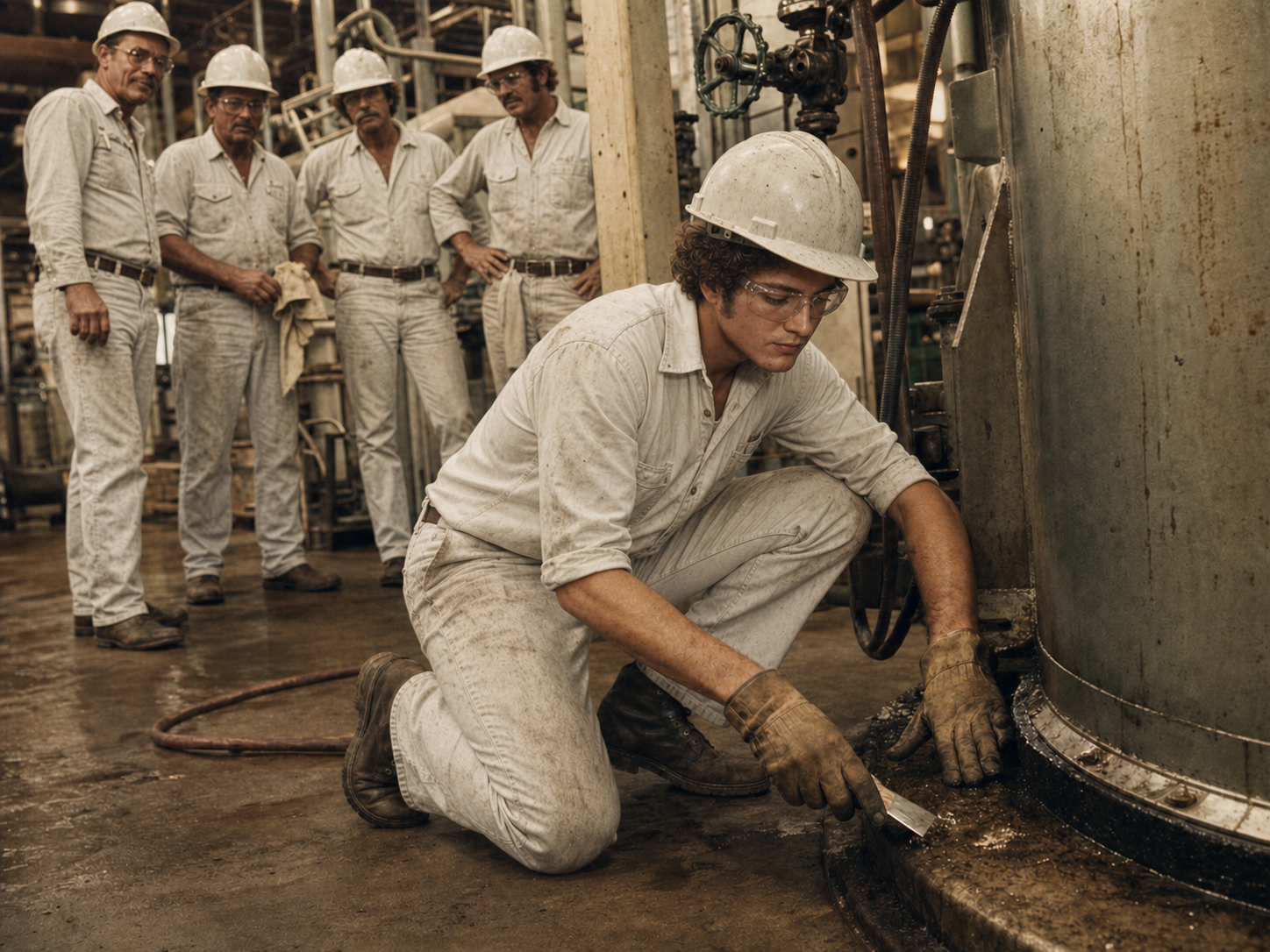
I started as a helper on the shop floor in the synthesis plant.
The absolute bottom.
My job title sounded simple enough.
Helper.
Help who?
With what?
Apparently, anyone who needed it and anything they didn’t want to do themselves. Most of the people in the plant had worked for Big Ab at one point or another. Now they had Bob’s boy standing in front of them.
They made sure I got all the dirty work.
The unpleasant jobs.
The miserable jobs.
The jobs everyone else had learned how to avoid.
Was it vindictive?
Maybe.
Or maybe they were simply making sure Big Ab’s boy earned his place the same way they had. Either way, I learned how to work.
The unpleasant jobs.
The miserable jobs.
The jobs everyone else had learned how to avoid.
Was it vindictive?
Maybe.
Or maybe they were simply making sure Big Ab’s boy earned his place the same way they had. Either way, I learned how to work.
I also learned when to keep my mouth shut.
Mostly.
Mostly.
People are actually pretty simple.
If they push and you don’t push back, they usually push harder. The key is learning when they’ve gone too far—and how to push back without making things worse. There’s a difference between paying your dues and allowing someone to walk over you.
If they push and you don’t push back, they usually push harder. The key is learning when they’ve gone too far—and how to push back without making things worse. There’s a difference between paying your dues and allowing someone to walk over you.
That was a life lesson.
Fortunately, I was a quick learner. It was a strange place for me to land. I had slept through most of chemistry class. Now I was working in a chemical synthesis plant. Maybe that employment application should have asked whether I had ever paid attention during school. That answer might have concerned them more than the one about hallucinogenic drugs.
One day, I was cleaning the floor around one of the tanks.
It was a mess.
I was digging years of old, funky dirt and God knows what else out from underneath it.
It was hot.
It stunk.
And it was nasty.
Nobody had told me to do it. It simply needed to be done.
Besides, I was probably bored.
There was an older supervisor in the plant.
Really old school.
He knew Big Ab well.
What I didn’t know was that he had been standing off to the side, watching me work for quite a while.
Eventually, I noticed him.
He walked over, looked at me, and said:
It was a mess.
I was digging years of old, funky dirt and God knows what else out from underneath it.
It was hot.
It stunk.
And it was nasty.
Nobody had told me to do it. It simply needed to be done.
Besides, I was probably bored.
There was an older supervisor in the plant.
Really old school.
He knew Big Ab well.
What I didn’t know was that he had been standing off to the side, watching me work for quite a while.
Eventually, I noticed him.
He walked over, looked at me, and said:
“Little Ab, you don’t impress me one bit.”
Little Ab.
That was another name some of them had for me.
I looked back at him.
That was another name some of them had for me.
I looked back at him.
“I’m not trying to impress you. I’m just doing my job.”
Then, because I apparently couldn’t leave well enough alone, I added:
“I wouldn’t think someone doing their job would impress you unless it’s a pretty rare event.”
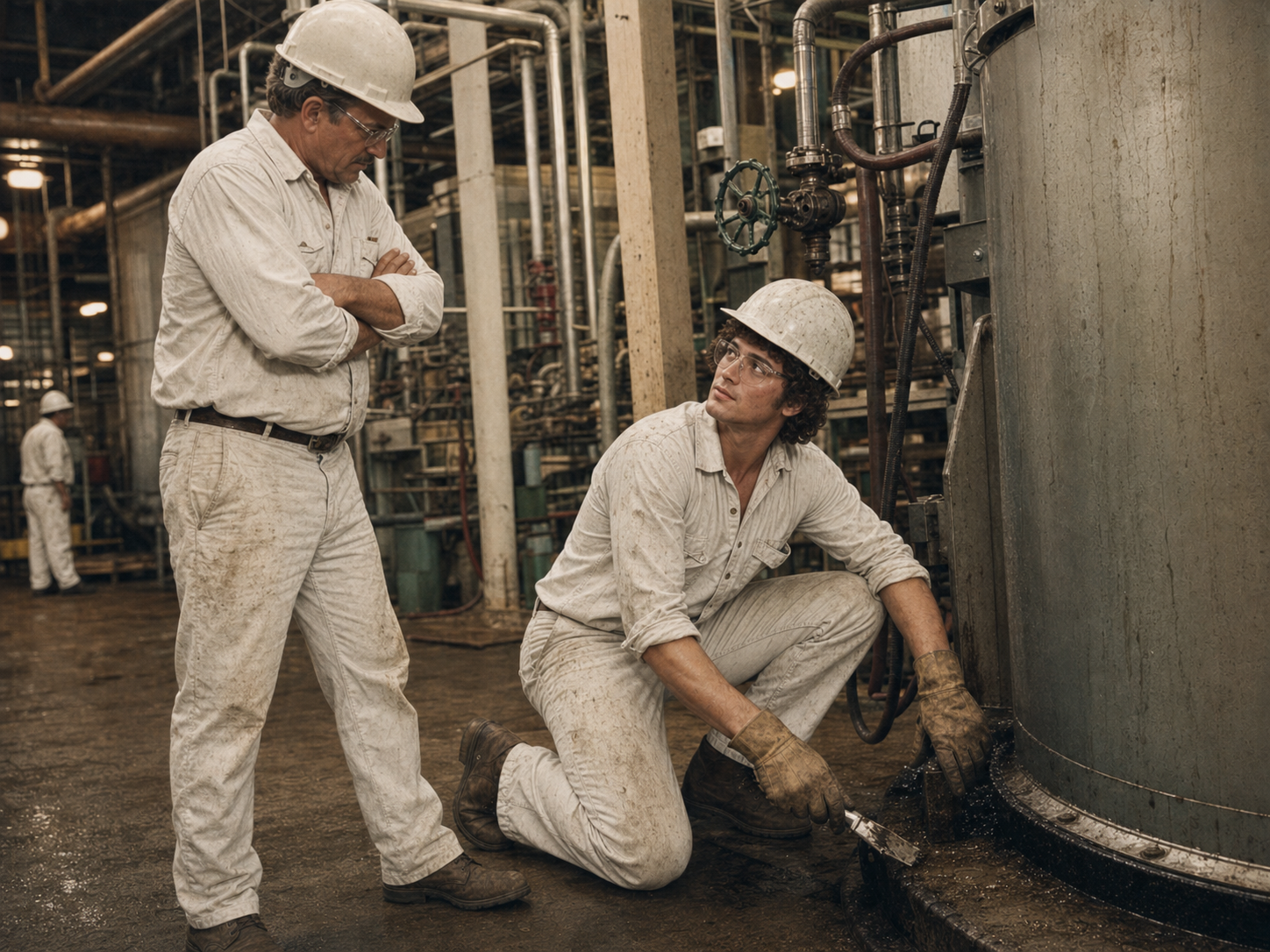
He loved me from that day forward.
I think he had been testing me. Maybe he wanted to see whether I would brag about working so hard. Maybe he wanted to see whether Bob’s boy expected a pat on the back. Or maybe he just wanted to see if Little Ab had any backbone.
Whatever answer he was looking for…
Apparently, I gave it to him.
Whatever answer he was looking for…
Apparently, I gave it to him.
The job introduced me to rotating shift work.
Three days on.
Three days off.
Seven in the morning until seven at night. Then the next week, seven at night until seven in the morning.
Twelve-hour shifts were long.
By the end of one, I was usually tired, dirty, and ready to get as far away from a synthesis plant as possible.
But the schedule had one major advantage.
Days off.
Lots of them.
Three days on.
Three days off.
Seven in the morning until seven at night. Then the next week, seven at night until seven in the morning.
Twelve-hour shifts were long.
By the end of one, I was usually tired, dirty, and ready to get as far away from a synthesis plant as possible.
But the schedule had one major advantage.
Days off.
Lots of them.
While most people were working five days to earn a two-day weekend, I worked three and got three. My body never knew whether it was supposed to be awake or asleep.
But my guitar didn’t care.
Those days off gave me time to write. More and more, I found myself picking up the guitar and trying to turn thoughts into songs. Some of those thoughts followed me home from the plant.

The synthesis floor was filled with characters.
Especially on the midnight shift.
There’s something about working through the middle of the night that gets people talking.
Maybe it’s the darkness.
Maybe it’s the exhaustion.
Maybe it’s simply knowing the rest of the world is asleep. Whatever the reason, people told stories.
Real stories.
Especially on the midnight shift.
There’s something about working through the middle of the night that gets people talking.
Maybe it’s the darkness.
Maybe it’s the exhaustion.
Maybe it’s simply knowing the rest of the world is asleep. Whatever the reason, people told stories.
Real stories.
There were men whose lives reached back through World War II, Korea, and Vietnam.
There were stories about marriages.
Divorces.
Children.
Mistakes.
There were stories about marriages.
Divorces.
Children.
Mistakes.
Places they had been and things they had seen that I had never dreamed of. They came from all over the country and from all kinds of backgrounds.
Iranian.
Cajun.
Mexican.
Black.
White.
Iranian.
Cajun.
Mexican.
Black.
White.
People who might never have crossed paths anywhere else found themselves working side by side through twelve-hour shifts in the same chemical plant.
I had gone to college expecting professors to teach me about the world. Instead, much of what I learned came from listening to the people working beside me at three o’clock in the morning.
They didn’t know it…
But they were giving a young songwriter material.
But they were giving a young songwriter material.
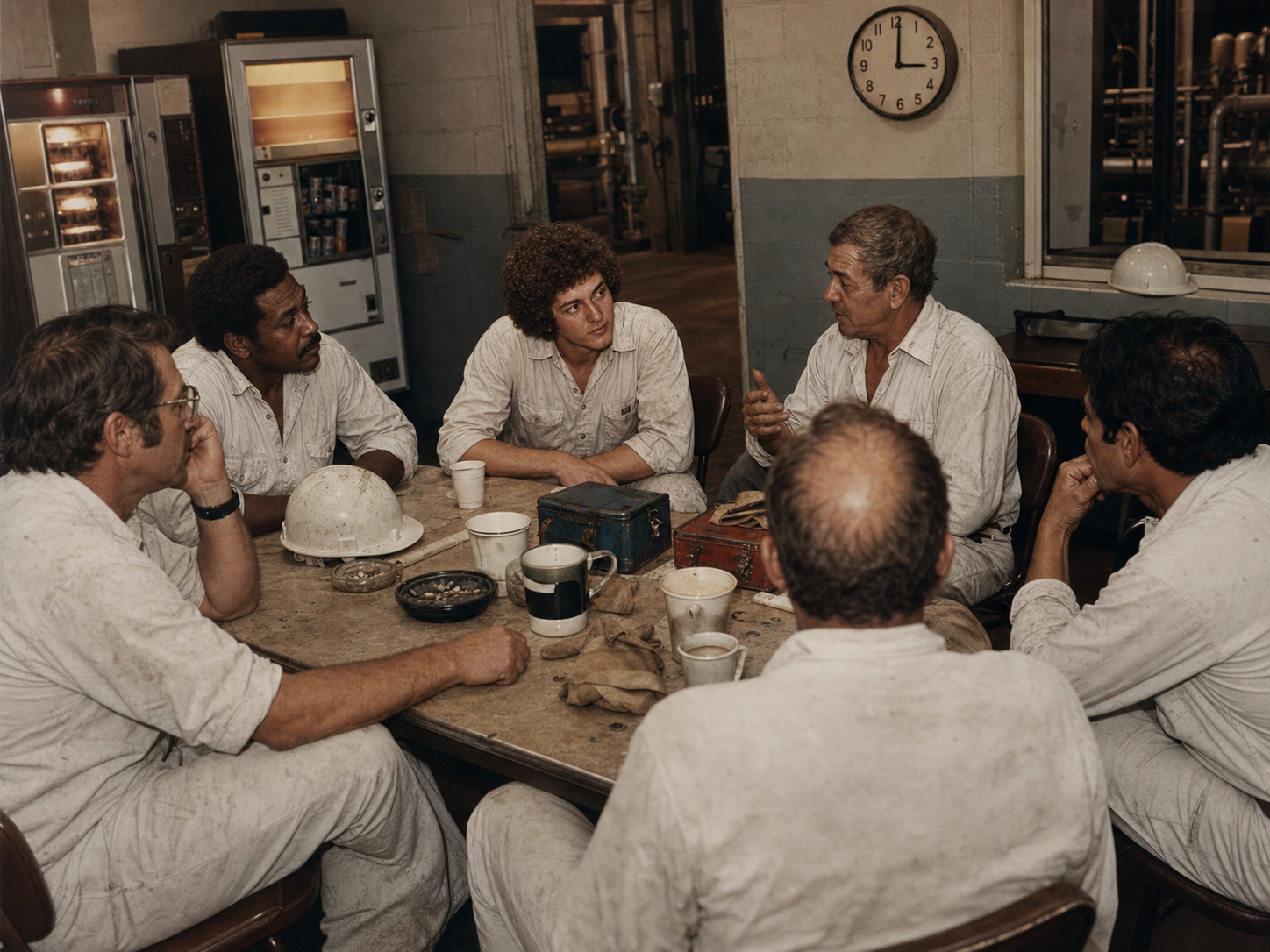
A lot of the guys were serious hunters and fishermen. They also enjoyed telling stories about hunting and fishing. Those stories tended to improve with age.
The fish got longer.
The deer got heavier.
The weather got worse.
The danger became greater.
And somehow, the storyteller became a little more heroic every time the story was told. One guy took that tradition further than anyone else. He had an answer for everything. It didn’t matter what subject came up.
Hunting.
Fishing.
Racing cars.
Politics.
Machinery.
Women.
War.
The fish got longer.
The deer got heavier.
The weather got worse.
The danger became greater.
And somehow, the storyteller became a little more heroic every time the story was told. One guy took that tradition further than anyone else. He had an answer for everything. It didn’t matter what subject came up.
Hunting.
Fishing.
Racing cars.
Politics.
Machinery.
Women.
War.
If someone mentioned it, he was already an expert. He was so completely full of shit that we gave him an honorary title:
The World’s Foremost Authority on Everything.
His lunchroom stories were epic.
We rarely believed a word he said.
But we never wanted him to stop talking.
We rarely believed a word he said.
But we never wanted him to stop talking.
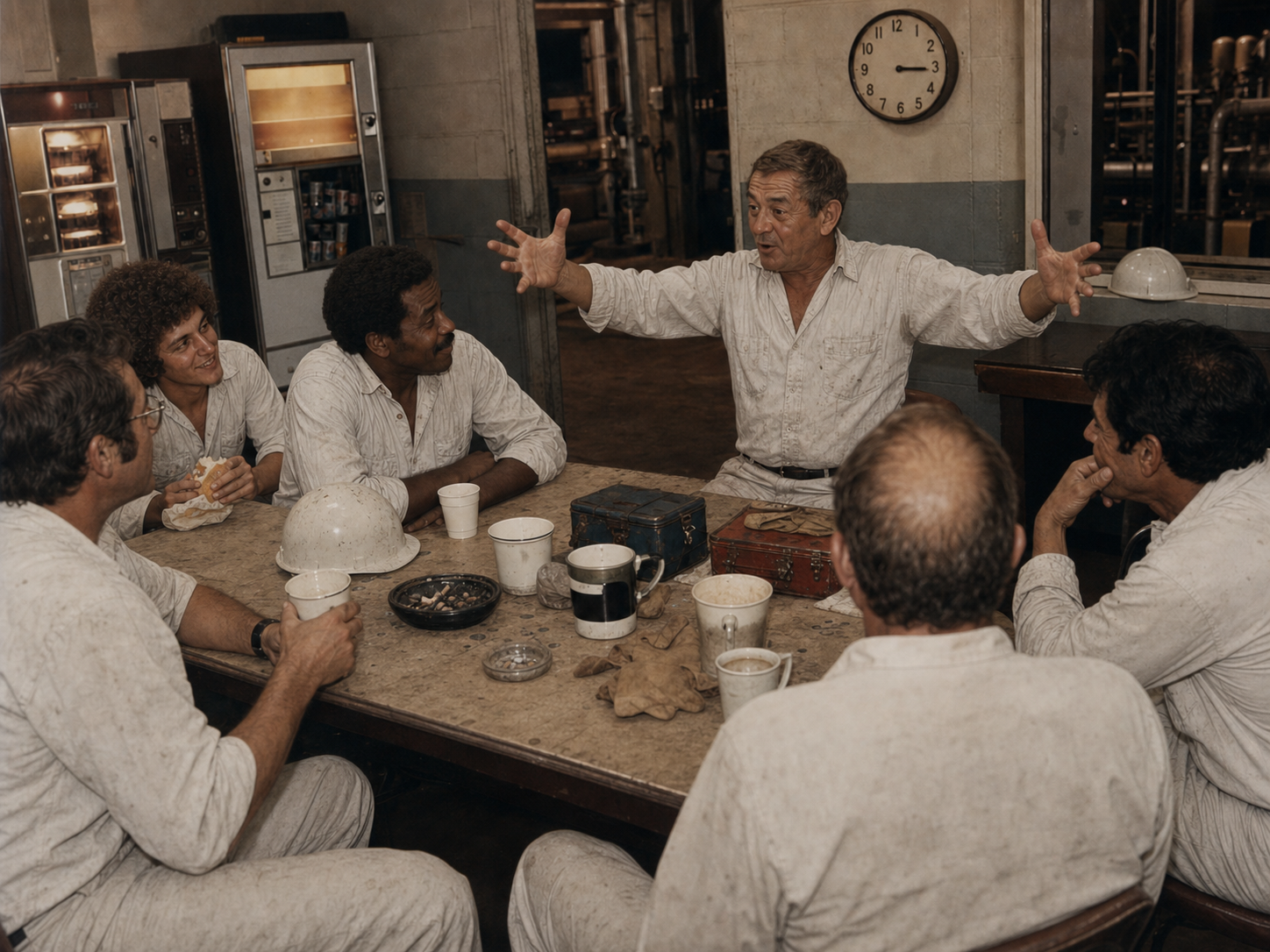
I would pull up a chair in the corner of that dim factory lunchroom, eat whatever passed for food from the vending machines, and listen with a grin as each story grew upon the one before it.
Decades later, he found his way into a song. By then, the world had changed. The factory lunchroom had become social media. The stories had become homemade facts.
The audience had become followers.
The audience had become followers.
And the World’s Foremost Authority on Everything had discovered politics, religion, and a way to monetize all that expertise. The man from the midnight shift became the starting point.
But the song wasn’t only about him anymore.
It was about all of them.
But the song wasn’t only about him anymore.
It was about all of them.

I thought I had taken the job to earn a paycheck.
I didn’t realize I was also learning how to listen.
Those men gave me stories long before I understood that I was collecting them.
Decades later, some of those stories became songs.
← Previous ChapterFormalwear and Other BenefitsChoose a ChapterNext Chapter →The Spreadsheet, the Suit, and the Stories