
My move from the plant floor into production planning began with a spreadsheet.
At the time, I was the Production Support Supervisor, which meant I was responsible for the plant’s raw-material inventories. It was a large synthesis plant, and we didn’t measure those materials in pounds.
We measured them in tons.
Literally.
Several railcars and truckloads arrived every week. If something didn’t arrive when we needed it, production could come to a stop. I had become frustrated with the planning department struggling to keep everything arriving on time.
There were phone calls.
Expediting.
More phone calls.
So one afternoon, I built a spreadsheet. It tracked the material in every tank, calculated our daily usage, and predicted when the next shipment needed to arrive. Then I expanded it to include the other synthesis plants. Every Monday, we met with the production planners. I would bring up the spreadsheet, show them what we needed and when we needed it, and they would place the orders.
It worked.
The materials arrived when we needed them.
The planners loved it.
And a whole lot of unnecessary phone calls disappeared.
One Monday, there was a new guy in the meeting. A manager hired from outside the company.
A military supply-chain guy.

He saw the spreadsheet and asked:
“Who built this?”
I told him I had.
He asked if we could talk. Essentially, he offered me a job in production planning based on a spreadsheet that had taken me one afternoon to build. I told him I would think about it. A couple of weeks later, he asked again.
We arranged to meet at five o’clock one evening. The people on the plant floor had a name for those who worked in the front office.
The suits.
As far as we were concerned, the suits sat in comfortable offices, played on computers all day, and didn’t do any real work. They certainly didn’t stay past four-thirty.
I was still a plant guy, so scheduling the meeting for five seemed like a good way to find out how serious this new manager was.
To his credit, he stayed.
We talked until nearly midnight about the job, the responsibilities, the money, and what he thought I could bring to the department.

Once I understood what the position involved, I did a Bill thing. I looked at him and said:
“What else am I going to do? This will not take me all day.”
I mean, really…
How hard could it be?
Apparently, that confidence didn’t scare him off.
I took the job.
An afternoon spent building a spreadsheet had moved me from the synthesis plant into production planning. Did I mention I slept through math class too?
From there, I became a Production Planner, Procurement Officer, and eventually Production Planning and Procurement Manager.
Along the way, I began managing projects. The projects were small and local at first.
They succeeded, so the next ones became larger. Eventually, that work carried me beyond the plant and into regional positions. I became a Program Manager and eventually Head of Logistics Optimization for North America, with a seat at the table during North American Leadership Team meetings.
Who would have guessed it?
The kid who slept through chemistry and math class was helping shape decisions for an entire region. I spent the final fifteen years of my career in those regional roles. The job took me around the world, giving me the opportunity to spread my particular line of bullshit across more countries than I ever imagined visiting.
I also became a featured speaker at dozens of industry conferences. Apparently, all those years learning how to read a room had finally become a legitimate business skill.
Conference organizers loved having me.
The Human Resources department found the whole thing considerably more stressful. Putting me on a stage with a microphone, an audience of thousands, and no one close enough to stop me made them nervous.
Not theoretically nervous.
Really nervous.
Have the lawyers review Bill’s presentation before he gets anywhere near the microphone kind of nervous.
That was a thing.
A real thing.
Apparently, decades of learning how to read a room had made me a pretty effective speaker.
It had not necessarily made me a predictable one.
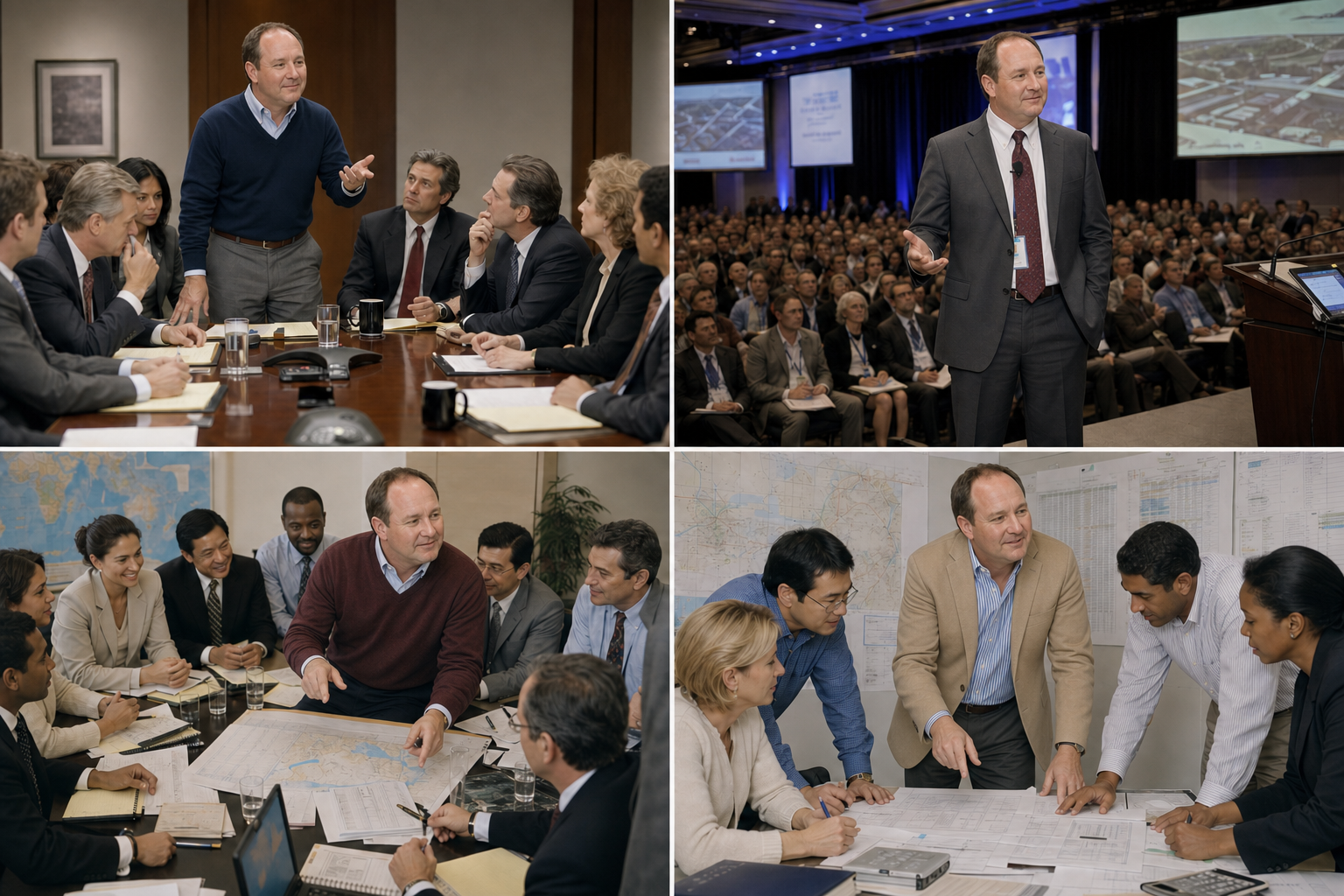
Years later, I was hosting a company conference for people who worked on the plant floors. At some point, one of them referred to me as a suit.
A suit.
I laughed.
I knew exactly what he meant. Somewhere between the plant floor, the planning office, the international projects, and the conference stages, I had crossed an invisible line. The plant guy had become one of the suits.
I just hoped I was a suit who still remembered where the real work got done.
There was some irony in all of that. After all, the thing that eventually turned me into a suit was a spreadsheet I had built in one afternoon while playing on a computer.

Forty-Three and a Half Years
When I took that job, I wasn’t thinking about building a career. I was thinking about the paycheck. I assumed I would work there for a while, make some money, and eventually figure out what came next. As it turned out, “a while” lasted forty-three and a half years. Not bad for a guy who had slept through chemistry and math class.
There are plenty of stories buried inside those years. Some will find their way into these pages when they belong.
But the titles aren’t really the important part.
What mattered were the people.
The lessons.
The stories.
The job paid the bills.
The people helped fill the songs. And somehow, I spent forty-three and a half years doing both.
Stories Waiting to Become Songs
I didn’t write those stories down at the time. I didn’t carry a notebook around the synthesis plant, recording every strange character or memorable conversation.
I simply listened.
Somehow, the stories stayed with me.
The veterans.
The hunters.
The fishermen.
The marriages.
The divorces.
The midnight philosophers.
The World’s Foremost Authority on Everything.
They settled into some quiet corner of my memory and waited.
That’s the funny thing about being a songwriter. You never know which people will remain with you. You never know which casual conversation will become a verse. You never know when a man eating vending-machine food in a dim factory lunchroom will reappear decades later with a website, a social-media following, and opinions about politics, religion, rocket science, and brain surgery.
I've always had a little motto..
“If you hear a song that sounds like it was written about you…It may have been.”
The people from the plant didn’t immediately become songs. They quietly lived inside me until the songs were ready for them.

← Previous ChapterThe HelperChoose a ChapterNext Chapter →Then Life Happened